Five Key Interventions that "Systemised" Indian Cricket

Ever since India lifted the ICC T20 men’s World Cup on March 8th in Ahmedabad by defeating New Zealand in a one-sided final, there have been numerous podcasts, interviews, TV debates, and discussions about how India has now built a “System” for its cricket. A system that ensures, regardless of the format, team, or conditions, India emerges as the winner or, at worst, the challenger.
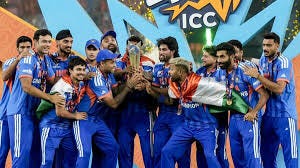
For several decades, India has been a dominant force in world cricket. However, this dominance has primarily been about attracting viewers and generating revenue. It is only recently that, alongside its financial strength, India has begun to dominate the sport on the field with consistent wins in ICC events. India did not achieve this level of dominance overnight. This is a result of a combination of factors that have gradually helped India reach this position over a long period.
There have been individual cricketers across eras who have contributed in their own way to elevating Indian cricket. There have been administrators who have played crucial roles. There have been spectacular moments of success for the Indian team, such as the 1983 World Cup win, the 2007 T20 World Cup victory, and the overseas series win against Australia in the Border-Gavaskar Trophy in 2019, which have, in some way or other, shaped the destiny of Indian cricket. But this piece is not about individual cricketers or administrators, or these wins that served as stepping stones, but about policy or strategic interventions that proved pivotal in India’s cricket journey and played a key role in “Systemising” Indian cricket. Let me explain each of them in its chronological order.
1. India co-hosting the 1987 ODI World Cup:
Until the 1987 ODI World Cup, this tournament was always held in England. It was called the Prudential Cup, named after the British multinational insurance company Prudential plc. Unlike today, the ICC and the administration of world cricket were controlled by the English and Australian cricket boards. Following India’s unexpected victory in the 1983 World Cup and its win at the 1985 Benson and Hedges Cup in Australia, ODIs as a format gained increasing popularity among Indian cricket fans. This was also the period when colour TVs started becoming common in Indian households.
NKP Salve, then BCCI President, during a lunch with his counterparts from Pakistan and Sri Lanka, shared his dream of hosting an event on the scale of the World Cup in India. However, convincing the powers at the English Cricket Board to adopt a rotational hosting system, which is in place today, was not easy. It required rallying support from smaller ICC associate members to vote in favour of this move, with the promise of five times the money they would have received if England had hosted the Cup. Of course, the idea of rotational hosting rights also appealed to Test-playing nations like Australia, which would benefit from it in the future. In a virtual coup of sorts, India and Pakistan managed to sway the support of associate nations in their favour and ultimately secured the decision with a large majority. Although ICC management tried to block the bid on technical grounds, the die was eventually cast.
Having won the hosting rights through a joint bid with Pakistan, the next challenge was to arrange the finances. Salve reached out to Dhirubhai Ambani of the Reliance group, who saw the opportunity and agreed to be the main sponsor of the Cup. This led to the 1987 World Cup being branded as the Reliance Cup. India, along with Pakistan, successfully hosted the fourth edition of the World Cup, which opened up many opportunities for the growth of cricket in India.
In the history of Indian cricket, if the 1983 World Cup win was significant for the game, hosting the 1987 Reliance Cup planted the seeds for shifting power dynamics within the ICC. The trio of NKP Salve, Jagmohan Dalmiya, and I.S. Bindra, as part of the BCCI administration, showcased the subcontinent’s soft power in cricket, which would eventually establish it as the dominant force it is today.
2. Setting up the MRF Pace Foundation - 1987:
If there is one unanimous conclusion after India’s recent T20 WC win among all cricket pundits, it is that Jasprit Bumrah is the best “all-format” bowler in the world today and would rank among the top all-time great fast bowlers to have played the game. If Imran Khan, the ex-Pakistani captain and one of the greatest pace bowlers, hears such chatter now, he would likely smile wryly and shake his head in disbelief. Throughout his cricketing career and afterwards, Imran always maintained that India lacked a genuine fast bowler capable of bowling over 140 km/h, and that until then, India could never become a dominant force in Tests. To a large extent, Imran was right.
Until the 80s, India’s successes in test cricket were mainly due to its batting and world-class spin bowling. It was only after Kapil Dev emerged that we started winning tests with non-spin bowling options. Kapil was still a medium pacer and not a genuine fast bowler. During that period, countries like the West Indies, Australia, England, and even Pakistan had some fiery fast bowlers, but India did not. Consequently, on green tops and seam-friendly conditions outside India, our team struggled to take the 20 wickets needed to win a test match, and India’s record overseas was nothing to write home about.
This was when Ravi Mammen, then the young Managing Director of MRF Ltd, came up with the idea of funding and establishing a world-class training academy for pace bowling in Chennai. He enlisted none other than Dennis Lillee, one of the greatest pace bowlers in the history of the game, to be the Director and Head Coach of the academy. T. A. Shekhar, a lanky fast bowler from Tamil Nadu, was recruited as his deputy to train the aspirants. Thus, the MRF Pace Foundation was founded in 1987 in Chennai to foster a pace-bowling culture among young Indians and develop match-winners for India. Initially, it didn’t have the BCCI’s approval and operated independently, discovering pace bowling talent across India.
Soon, trainees from the academy started making their mark in domestic cricket and found their way into the India team. Starting with Vivek Razdan, some of the big names in Indian cricket like Javagal Srinath, Venkatesh Prasad, and later Zaheer Khan, Irfan Pathan, and others graduated from the MRF academy and became part of India’s success story in cricket. Who can underestimate the role played by Zaheer in India’s successful 2007 ICC World Cup campaign or Irfan Pathan’s role in overseas series wins in Pakistan?
Ravi Mammen, if he were alive today, would be pleased to see how his bare, raw vision of a pace academy to hunt, groom, and develop genuine pace bowlers capable of representing India and contributing to its success at an international level has come to fruition. Today, apart from BCCI’s own National Cricket Academy, many private academies are nurturing young talent for top-level cricket. The contribution of the MRF Pace Foundation in developing Indian players might have diminished over time, but its role in shaping India’s cricket success remains significant.
3. Opening of media rights – 1993:
Until the early 90s, the state-run Doordarshan held exclusive rights to broadcast India’s cricket matches live. Under this system, Doordarshan paid the BCCI very little, if anything, but made money from advertising during its broadcasts. However, this changed in 1993 when the BCCI, under President I.S. Bindra, decided to sell overseas and satellite TV rights to private companies. This move introduced players like Trans World International (TWI) and Star Sports into India’s cricket broadcasting scene. At that time, satellite television was expanding rapidly as India opened its airwaves to private broadcasters.
Though the government went to court on this, the Supreme Court, in a landmark judgement, ruled in favour of the BCCI, affirming that it owned the telecast and broadcast rights as the organiser of these cricket events. The Hero Cup, a multi-lateral ODI tournament held to celebrate the Golden Jubilee year of the Cricket Association of Bengal, was the first tournament in which, along with Doordarshan, the telecast rights were sold to private broadcasters.
The overwhelming success of this experiment in terms of advertising revenue set the template for BCCI and even ICC to monetise tournaments in which India participated. The massive viewership numbers a cricket game drew whenever India took the field meant that India could not be kept out of any equation when it came to Cricket. This translated directly into financial power and influence for India, which is evident today. Additionally, this helped ensure a broad distribution of revenues to state associations for developing infrastructure at the grassroots level and nurturing talent. The opening up of media rights also showcased Indian cricket as a highly attractive market for both domestic and international broadcasters, who have since eagerly targeted India. This aspect was also vital in making a product like IPL appealing to investors in its early stages.
4. Appointment of a foreign coach for the first time – 2000:
By the late 90s, Indian cricket was going through turbulent times, with match-fixing allegations coming to light in India after the Hansie Cronje scandal. Kapil Dev, who became the coach of the Indian team in September 1999, resigned in September 2000 after match-fixing allegations were made against him. In March 2000, Sachin Tendulkar stepped down as captain following a series of failures, and Saurav Ganguly was appointed as his replacement.
It was during this difficult period that the BCCI, under A.C. Muthiah’s leadership, considered appointing a foreign coach for the Indian cricket team for the first time. Until then, the Indian team had only former Indian players like Ajit Wadekar, Madan Lal, Sandeep Patil, Kapil Dev, etc., who doubled up as coaches and managers. However, outside India, teams like Australia and England appointed professional coaches and specialists for different disciplines like fielding, batting, and bowling. These countries favoured individuals who could analyse playing conditions, strategise, motivate, and mentor the team as coaches rather than players with a strong cricketing record.
Incidentally, some senior players in the Indian team advocated for a foreign coach after Bob Simpson’s successful stint as a consultant a few years earlier. Raj Singh Dungapur, who was on the panel responsible for selecting a new coach, followed Rahul Dravid’s advice and appointed John Wright as coach. Wright approached his role with dedication and was the first to introduce computer-based analysis into the Indian dressing room. He also emphasised the importance of punctuality, honesty, and intensity to the team. Fitness was another area he focused on. His initial observation, “When it came to batting practice, the challenge was getting them to stop; with fitness, it was getting them started,” captured the team’s prevailing attitude towards fitness.
Wright’s five-year tenure included India winning a historic test series against Australia at home in 2001, conquering Pakistan in their backyard for the first time in 2003, and finishing as runner-up in the ICC World Cup in 2003. But his greater contribution was transforming India into a team to be reckoned with, even on overseas tours in England and Australia.
After Wright, India had Gary Kirsten as the head coach for three years from 2008 to 2011, during which we won the ICC ODI World Cup in India and reached the number one spot in Test Cricket for the first time. The appointment of Wright in 2000 was a pivotal moment that brought professionalism and a modern analytical approach to Indian cricket, which, to this day, has kept it in good standing. This also led our administrators to believe that foreign coaches can work for India, notwithstanding the experience with Greg Chappell.
5. The introduction of the Indian Premier League - 2008:
The benefits of IPL, as we see them today, are obvious and right before our eyes. IPL has helped democratise cricket like never before. It has brought cricket to the hinterlands of the country, where some exciting talents are now regularly knocking on the doors of selection. Most experts now admit that India can easily replace a bunch of players from a winning XI and still win the next match. IPL has been effective in maintaining a strong talent pipeline.
There is no doubt that among all five interventions listed above, the introduction of IPL or franchise cricket per se has perhaps had the most significant impact on ‘systemising” Indian cricket. Lalit Modi, the founder and former Chairman of IPL, of course, did everything in his power to sell the concept of franchise cricket, and after 18 years, we see that it has been a global trailblazer. However, we should not forget the other four interventions, which also had their own impact on Indian cricket, taking it where it is today!
Hi Anand, Really brilliant piece on Indian Cricket. You have captured all management related aspects which have over a period of time helped Indian Cricket to what we see today. Kudos to all who have contributed to this.
Brilliant one, Anand!!!!
Beautifully explained Chitappa. Very easy to relate to, even for a novice cricket viewer such as myself.